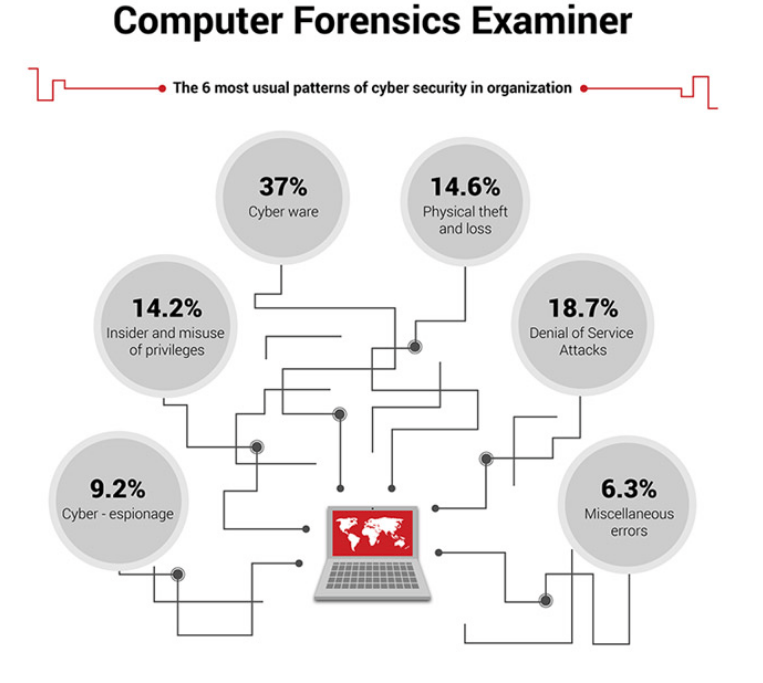

Computer Forensics, also known as Cyber Forensics refers to the analysis of information in the computer systems, with the objective of finding any digital evidence that can be used for legal proceedings, but also to discover the cause of an incident. Computer forensics is the process of extracting data and information from computer systems to function as digital evidence for civic purposes, or in most cases to prove and legally impeach cybercrime.
The purpose of computer forensics is to provide forensic practices, legal processes, and ethical principles to assure reliable and detailed digital evidence that can be used for the courtroom needs. The objective of computer forensics is to guarantee a well-structured investigation and a follow-up of processes in order to resolve incidents and malfunctions in an organization.
Why is Computer Forensics important for you?
A forensics process is applied after the cyber attack or incident has occurred in order to collect and analyze the data to determine what happened, how did it happen and why did it happen? Computer forensics can be used as a tool to exploit backdoors that should be patched. A computer forensics investigation is a proficient mechanism that allows organizations’ to rationalize their time and immense financial impacts.
An internationally recognized computer forensic professional will be able to provide a detailed investigation of computer systems and assist the law enforcement authorities. Computer forensics’ provide you with the advantage of learning and practicing the latest comprehensive security methodologies of network systems, encryption technology, file operating systems, and criminal science.
Learning Objectives
By the end of this training course, the participants will be able to:
- Understand the roles and responsibilities of the Lead Computer Forensics examiner during digital forensic investigation
- Understand the purpose of electronic media examination and its correlation with common standards and methodologies
- Comprehend the correct sequence of steps of a computer incident investigation and digital forensic operation
- Understand the common commercial and open source tools that may be used during incident investigation and digital forensic operations
- Acquire the necessary competencies to plan and execute a computer forensics operation and also implement and maintain a safety network to protect evidence
Why should you attend?
Lead Computer Forensics Examiner training enables you to acquire the necessary expertise to perform Computer Forensics processes in order to obtain complete and reliable digital evidence. During this training course, you will also gain a thorough understanding of Computer Forensics fundamentals, based on the best practices used to perform forensics evidence recovery and analytical techniques. This training course is focused on core skills required to collect and analyze data from Windows, Mac OS X, and Linux operating systems, and also from mobile devices.
After mastering all the necessary concepts of Computer Forensics processes, you can sit for the exam and apply for a “PECB Certified Lead Computer Forensics Examiner” credential. By holding a PECB Lead Computer Forensics Examiner Certificate, you will be able to prove that you have the expertise to lead advanced forensic investigations and conduct forensics analysis, reporting, and evidence acquisition.
Who should attend?
This course is particularly advantageous and intended for:
- Computer Forensics specialists
- Computer Forensics consultants
- Cybersecurity professionals
- Cyber intelligence analysts
- Electronic data analysts
- Specialists in computer evidence recovery
- Professionals working or interested in law enforcement
- Professionals seeking to advance their knowledge in Computer Forensics analysis
- Information Security team members
- Information technology expert advisors
- Individuals responsible for examining media to extract and disclose data
- IT Specialists
Educational Approach
- This training is based on both theory and best practices used in Computer Forensics
- Lecture sessions are illustrated with examples based on case studies
- Practical exercises are based on a case study which includes role playing and discussions
- Practice tests are similar to the Certification Exam
Prerequisites
Knowledge on Computer Forensics.
Course Agenda
Incident Response and Computer Forensic Concepts
- Course objectives and structure
- Standard and regulatory framework
- Historical aspects of Digital Forensic
- Basic concepts and definitions in ISO 27037
- Overview of ISO 27037 standard
- Roles and responsibility of CLFE
- Computer Forensic Laboratory
Prepare and Lead a Computer Forensic Investigation
- Technical fundamentals
- File System Forensic
- Common File Systems
- Common Operating Systems
- Forensic Acquisition
Digital Artifacts Analysis and Management
- Digital artifacts: Identify, acquire, analyze and communicate
- Using open source forensic acquisition and analysis tools
- ISO/IEC 27037:2012
- Advanced Keywords searching with Regular Expression
Case Presentation & Trial Simulation
- Decision-making of collection or acquisition of potential digital evidence
- Other Essential Digital Forensic Topics
- CLFE Professional Ethics
- Presenting Digital Forensic Findings
- Competence and evaluation of examiners
- Closing the training
Certification Exam
- 3 Hours Exam
Examination
The “PECB Certified Lead Computer Forensics Examiner” exam fully meets the requirements of the PECB Examination and Certification Programme (ECP). The exam covers the following competency domains:
- Domain 1: Fundamental principles and concepts of Computer Forensics
- Domain 2: Best practices on Computer Forensics
- Domain 3: Digital forensics laboratory requirements
- Domain 4: Operating system and file system structures
- Domain 5: Mobile devices
- Domain 6: Computer crime investigation and forensics examination
- Domain 7: Maintaining chain of evidence
For specific information about the exam type, languages available, and other details, please visit the List of PECB Exams and Exam Rules and Policies.
Certification
After successfully completing the exam, you can apply for the credentials shown on the table below. You will receive a certificate once you comply with all the requirements related to the selected credential. For more information about Computer Forensics certifications and the PECB certification process, please refer to the Certification Rules and Policies.
The requirements for PECB Computer Forensics Examiner Certifications are:
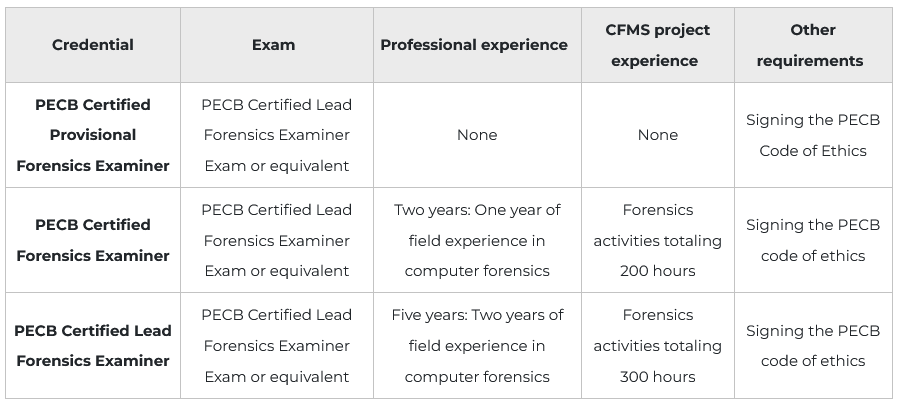
PECB Certified Lead Computer Forensics Examiner Certifications
To be considered valid, these computer forensics activities should follow best implementation practices and include the following:
- Conducting forensic investigation
- Post incident response activities
- Network management
- Computer forensics examination and analysis planning
- Analysis of file systems and digital media
- Forensics analysis of operating systems and networks
- Forensics analysis of computer and mobile devices
- Gathering digital evidence
For more information about the PECB Certification process, please refer to Certification Rules and Policies.
For more information, visit the PECB PECB Certified Lead Computer Forensics Examiner | Cybersecurity Training Courses
Download the brochure PECB Certified Lead Computer Forensics Examiner | Cybersecurity Training Courses